
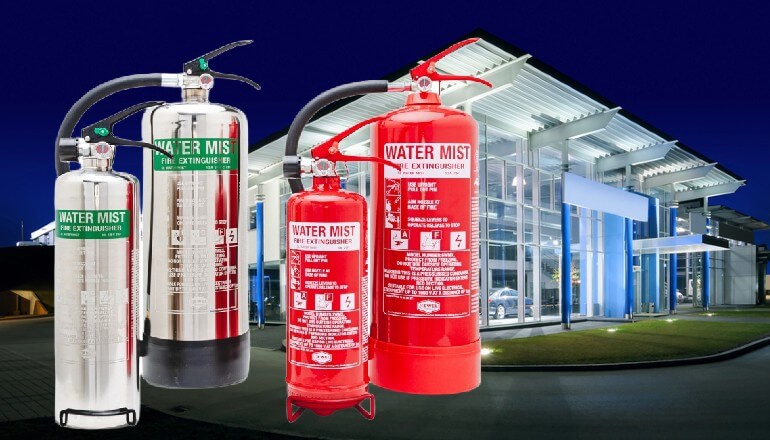
In Harrogate’s commercial sector — spanning boutique retail, hospitality venues, offices and healthcare environments — fire safety requires a more considered, design-led approach. Fire extinguishers are not simply installed to meet regulations; they must be carefully selected and positioned to reflect the specific fire risks within each premises while maintaining a professional environment.
One of the most common issues in commercial fire safety is over-generalisation. Many businesses rely on a basic combination of extinguishers without fully considering whether they are appropriate for the risks present. In Harrogate, where premises often include high-value interiors, specialist equipment or customer-facing spaces, this approach can lead to ineffective protection.
The starting point for any extinguisher strategy is understanding fire classification. Class A fires involve solid materials such as wood, paper and textiles — common in offices and retail environments. Water extinguishers are typically used for these risks, providing effective suppression in low-risk commercial settings.
However, many Harrogate businesses involve more complex risks. Foam extinguishers are often specified where there is a combination of Class A materials and flammable liquids, such as in workshops or premises using cleaning chemicals or fuels. Their ability to cover multiple fire types makes them a practical choice in mixed-use environments.
Electrical risk is a major consideration in modern commercial buildings. Offices, retail units and hospitality venues all rely heavily on electrical equipment. CO2 extinguishers are essential in these areas, as they can suppress fires without damaging equipment or leaving residue. In high-end commercial environments, this is particularly important to avoid unnecessary disruption or loss.
Hospitality venues introduce a different level of risk due to commercial kitchens. Cooking oils and fats require specialist protection in the form of wet chemical extinguishers. These are specifically designed to deal with high-temperature cooking fires and are a critical component of fire safety in restaurants, cafés and hotels across Harrogate.
Powder extinguishers may be used in certain external or industrial applications, but they are generally avoided in enclosed commercial environments due to the potential for reduced visibility and contamination when discharged.
Placement is where many systems fall short. Extinguishers must be located along escape routes and near exits, ensuring they are accessible without placing users at risk. In Harrogate’s design-conscious commercial spaces, placement must also be discreet yet clearly visible. This balance ensures that fire safety equipment does not detract from the environment while remaining fully functional.
Spacing is another key factor. Extinguishers must be distributed so that travel distances to reach them are within recommended limits. In larger premises, this requires a structured layout to ensure consistent coverage across all areas.
Signage is essential for effective use. Clear, visible signage ensures that staff can quickly identify the correct extinguisher type and location. This is particularly important in environments with multiple extinguisher types, where incorrect use could be dangerous.
Training is often overlooked but plays a critical role in fire safety. Staff must understand which extinguishers to use and how to operate them safely. In Harrogate’s customer-facing businesses, where staff may need to respond quickly to protect both people and property, this knowledge is vital.
Maintenance ensures that extinguishers remain reliable. Regular servicing checks pressure levels, seals and overall condition, ensuring equipment is ready for use when needed. In commercial premises, this is both a legal requirement and a practical necessity.
Fire risk assessments underpin the entire process. Each business must assess its specific risks and ensure that appropriate extinguishers are in place. This includes reviewing changes to layout, equipment or operations that may affect fire safety requirements.
For businesses in Harrogate, fire extinguishers must be part of a broader, well-considered fire safety strategy. By focusing on correct selection, precise placement and ongoing maintenance, they provide effective, reliable protection that supports both compliance and operational safety.