
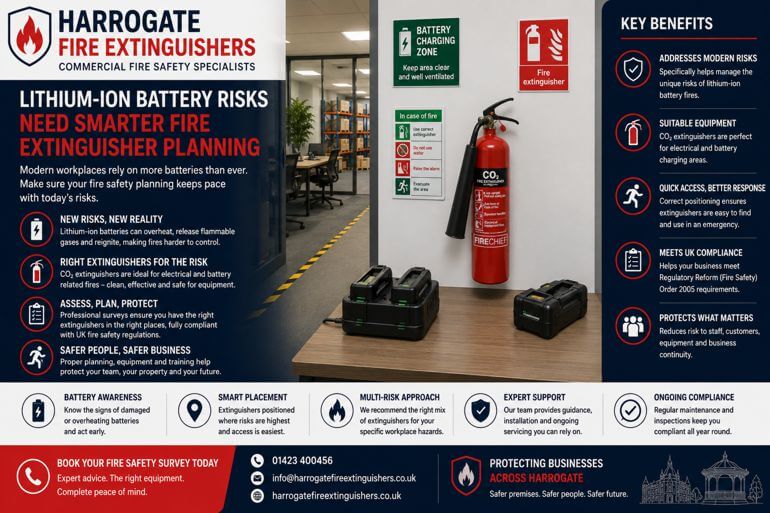
Lithium-Ion Battery Risks –
Commercial fire safety planning across Harrogate is rapidly evolving as businesses increasingly rely on:
- lithium-ion batteries
- portable electronics
- cordless equipment
- e-bikes
- backup power systems
- and rechargeable technology
within daily operations.
As these technologies become more common, businesses are reassessing whether traditional fire extinguisher planning alone is sufficient for modern commercial risks.
Lithium-Ion Battery Risks Are Increasing In Commercial Premises
Lithium-ion batteries are now commonly found within:
- offices
- warehouses
- retail premises
- workshops
- logistics facilities
- and hospitality environments.
Common examples include:
- laptops
- mobile devices
- cordless tools
- cleaning equipment
- scooters
- and battery storage systems.
While highly efficient, damaged or defective batteries may present unique fire risks compared to traditional combustibles.
Battery Fires Behave Differently
Lithium-ion battery fires may:
- generate extreme heat
- reignite unexpectedly
- release flammable gases
- and spread rapidly between battery cells.
This behaviour can differ significantly from:
- paper fires
- wood fires
- or general combustible materials.
Businesses Are Reviewing Extinguisher Suitability
Many commercial premises are now reviewing whether existing extinguisher provision adequately reflects:
- battery charging locations
- electrical risks
- and evolving workplace equipment.
Professional extinguisher surveys increasingly assess:
- charging stations
- storage areas
- battery usage patterns
- and electrical equipment concentrations
throughout the premises.
CO2 Extinguishers Remain Important For Electrical Risks
CO2 extinguishers continue to play an important role around:
- electrical equipment
- IT infrastructure
- server rooms
- and charging locations
because they help suppress electrical fires without leaving residue damage.
However, businesses should always ensure extinguisher selection reflects the specific risks identified within the fire risk assessment.
Charging Areas Require Careful Planning
Commercial battery charging areas should consider:
- ventilation
- separation distances
- safe storage
- electrical safety
- and appropriate extinguisher provision.
Poor charging practices may increase:
- overheating risk
- battery damage
- and potential fire hazards.
Staff Awareness Is Becoming Increasingly Important
Businesses increasingly provide fire safety awareness around:
- damaged batteries
- overheating devices
- unusual odours
- swelling battery packs
- and charging safety.
Early identification of battery issues may help reduce fire risk significantly.
Extinguisher Positioning Must Remain Practical
Commercial extinguishers should remain:
- clearly visible
- easy to access
- correctly signed
- and mounted at appropriate UK-compliant heights
throughout the premises.
Poor placement may delay response times during emergency situations.
Modern Commercial Risks Continue Evolving
Fire safety planning increasingly needs to consider:
- changing technology
- modern workplace equipment
- flexible working environments
- and higher electrical dependency
rather than relying solely on traditional fire protection assumptions.
Professional Fire Risk Assessments Remain Essential
Professional surveys help businesses ensure:
- suitable extinguisher selection
- compliant positioning
- correct signage
- and appropriate coverage
based on the actual operational risks within the premises.
Smarter Fire Safety Planning Supports Modern Businesses
For businesses in Harrogate, professionally planned extinguisher provision that considers lithium-ion battery risks helps provide:
- improved workplace safety
- stronger regulatory compliance
- better risk management
- and greater peace of mind
As commercial technology continues evolving, fire extinguisher planning must continue adapting alongside the risks modern businesses now face.
Frequently Asked Questions
Why are lithium-ion battery fires different?
They can generate extreme heat, reignite unexpectedly and spread rapidly between battery cells.
Are CO2 extinguishers suitable near electrical equipment?
Yes. CO2 extinguishers are commonly used around electrical risks because they leave no residue.
Should businesses review extinguisher provision regularly?
Yes. Fire risks often change as equipment, layouts and operational activities evolve.