
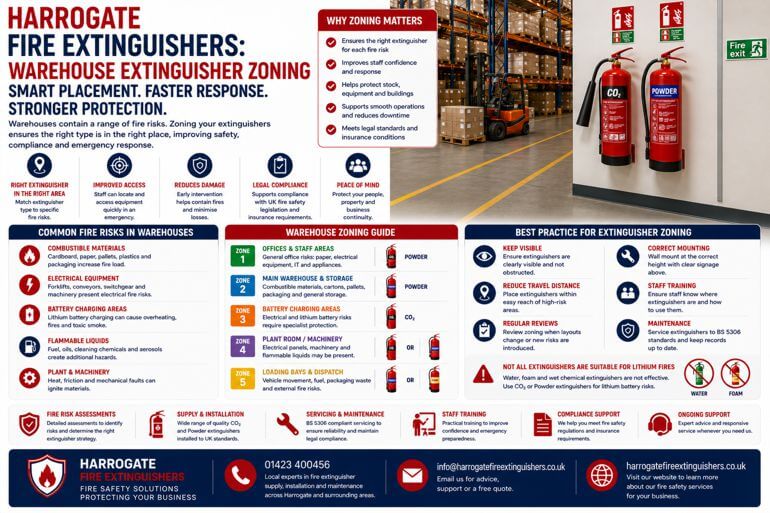
Warehouse Fire Extinguisher Zoning –
Warehouses across Harrogate are becoming increasingly complex environments, often combining:
- pallet storage
- machinery
- charging stations
- packaging areas
- offices
- and loading bays
within a single premises.
As warehouse layouts become larger and more operationally demanding, businesses are placing greater focus on fire extinguisher zoning to improve fire safety and emergency response.
Rather than simply distributing extinguishers evenly throughout a building, zoning involves positioning specific extinguisher types according to the individual risks present in different operational areas.
Warehouses Often Contain Multiple Fire Risks
Modern warehouses rarely contain a single fire hazard type.
Different areas may involve:
- electrical equipment
- combustible stock
- flammable liquids
- battery charging
- machinery
- or packaging materials
Each environment may require different extinguisher considerations.
One Extinguisher Type May Not Suit Every Area
Some businesses mistakenly assume all extinguishers provide identical protection.
In reality, extinguisher suitability depends heavily on:
- the materials involved
- operational activities
- and surrounding fire risks
Correct zoning helps ensure appropriate extinguishers are positioned where they are most likely to be needed.
Loading Bays Present Unique Challenges
Loading and dispatch areas often experience:
- vehicle movement
- packaging waste
- electrical equipment
- and changing operational activity
These environments may require:
- clear extinguisher visibility
- protected mounting locations
- and unobstructed access routes
Forklift Charging Areas Require Additional Attention
Battery charging locations are becoming increasingly important within warehouse fire safety planning.
Charging areas may involve:
- electrical hazards
- lithium battery risks
- heat build-up
- and concentrated charging equipment
Fire extinguisher zoning helps businesses identify:
- suitable extinguisher types
- positioning
- and additional fire safety considerations
for these environments.
Storage Racking Can Affect Accessibility
Large pallet racking systems can sometimes:
- obstruct extinguisher visibility
- increase travel distances
- or create isolated storage zones
Professional extinguisher planning helps ensure equipment remains:
- visible
- accessible
- and easy to locate quickly
throughout the warehouse.
Machinery Areas May Require Different Protection
Warehouses containing:
- conveyor systems
- production equipment
- workshops
- or engineering areas
may involve additional:
- electrical risks
- moving machinery
- and heat sources
Extinguisher zoning helps tailor protection to these operational areas.
Offices Within Warehouses Still Require Coverage
Many warehouses now include:
- office spaces
- meeting rooms
- canteens
- and staff facilities
These areas may require separate extinguisher considerations from the main warehouse operation.
Signage And Identification Become More Important In Larger Premises
In larger commercial buildings, staff may struggle to identify:
- extinguisher locations
- extinguisher types
- or nearby fire points
during emergencies.
Clear signage and consistent zoning help improve:
- awareness
- response confidence
- and accessibility
Warehouse Layouts Often Change Over Time
Warehouses frequently evolve due to:
- stock changes
- operational growth
- seasonal demand
- or layout reconfiguration
These changes may unintentionally affect:
- extinguisher visibility
- access routes
- and zoning effectiveness
Regular fire safety reviews help maintain suitable protection.
Extinguisher Zoning Supports Faster Emergency Response
In the very early stages of some fires, fast access to the correct extinguisher may help:
- reduce fire spread
- protect escape routes
- and minimise operational disruption
This depends heavily on:
- correct extinguisher selection
- strategic placement
- and good staff awareness
Warehouse Fire Safety Requires More Strategic Planning
For businesses in Harrogate, modern warehouse fire safety increasingly depends on intelligent extinguisher planning rather than basic minimum coverage alone.
Professional extinguisher zoning helps provide:
- clearer risk management
- improved accessibility
- stronger compliance
- and better overall workplace fire protection
As warehouses continue evolving into more complex operational environments, extinguisher zoning is becoming an increasingly valuable part of commercial fire safety strategy.
Frequently Asked Questions
What is extinguisher zoning?
It involves positioning different extinguisher types according to the specific fire risks in each area of a premises.
Why is extinguisher zoning important in warehouses?
Warehouses often contain multiple fire risks requiring different extinguisher considerations.
Can warehouse layouts affect extinguisher compliance?
Yes. Storage changes and operational alterations can impact visibility and accessibility over time.